3D sculpting · realistic & stylised
3D sculpting
outsourcing
for games
We sculpt wood, metal and stone, and everything that happens to them: dents, weld seams, damage. Cloth and soft forms too. Realistic or stylised, your call. We deliver the high-poly in a format agreed before work starts, or take it through to a finished model in engine.
- Wood, metal & stone
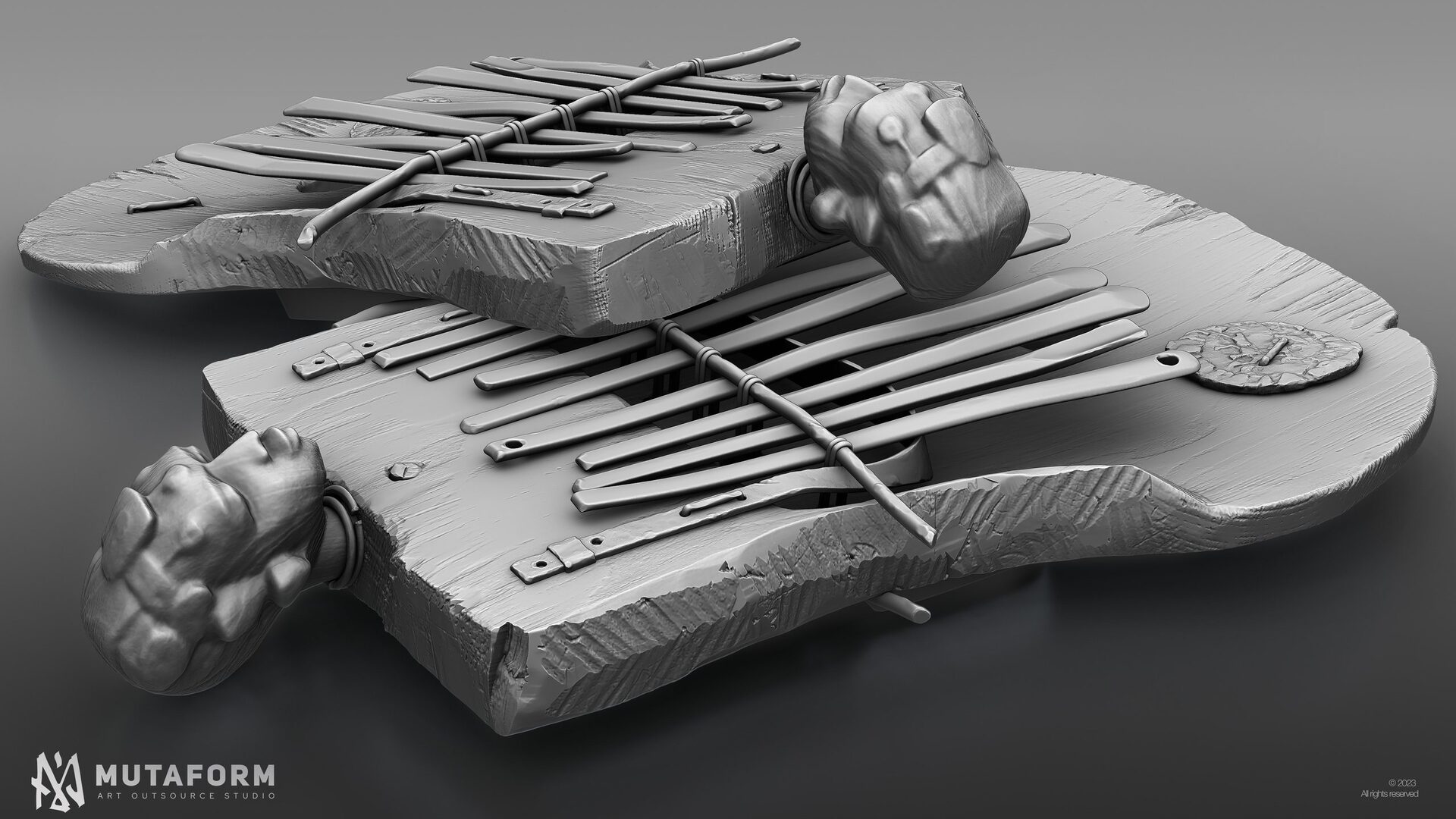
- Ornament & carving
- Cloth & folds
- Anatomy & creatures
- Damage & wear
02The discipline
What we take on
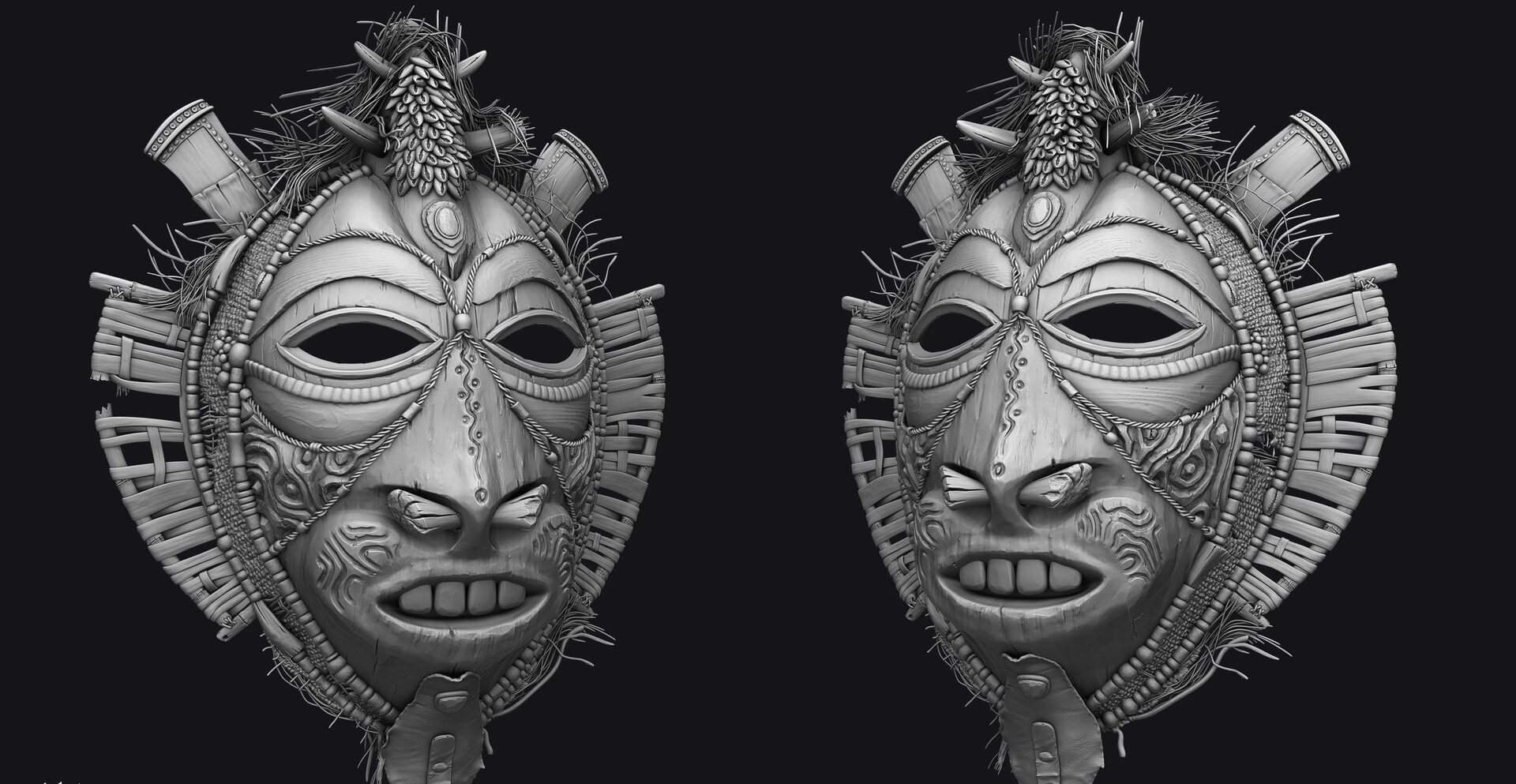
Reads from afar, convincing up close.
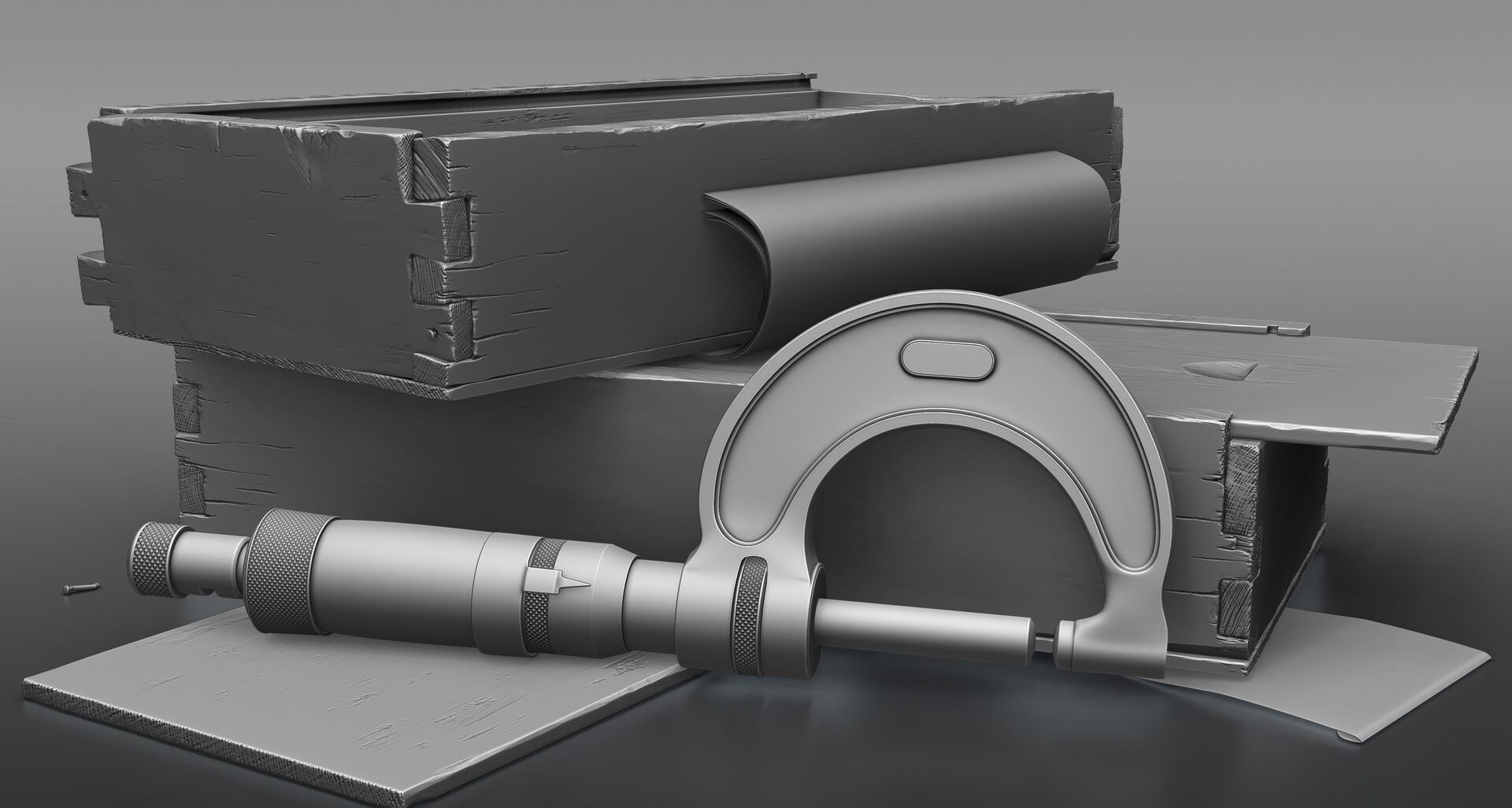
Wood grain, dents and weld seams on metal, chips and strata in stone, wickerwork and weave. Depth of detail follows gameplay distance.
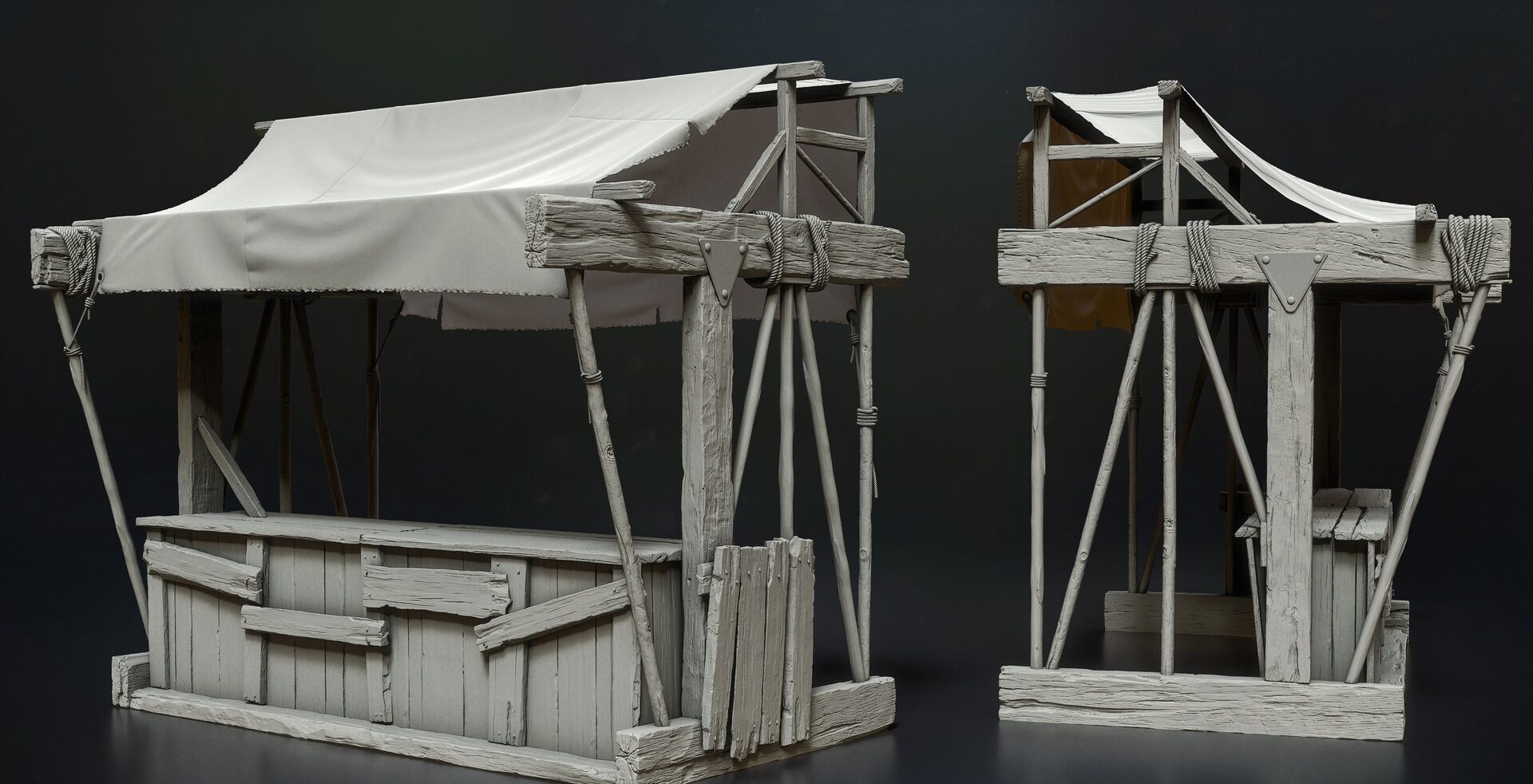
Detail that reads, not noise.
Realistic enough to pass for a scan, or stylised. Either way we know when to stop: we don’t chase detail that would only turn into noise on the normal map.
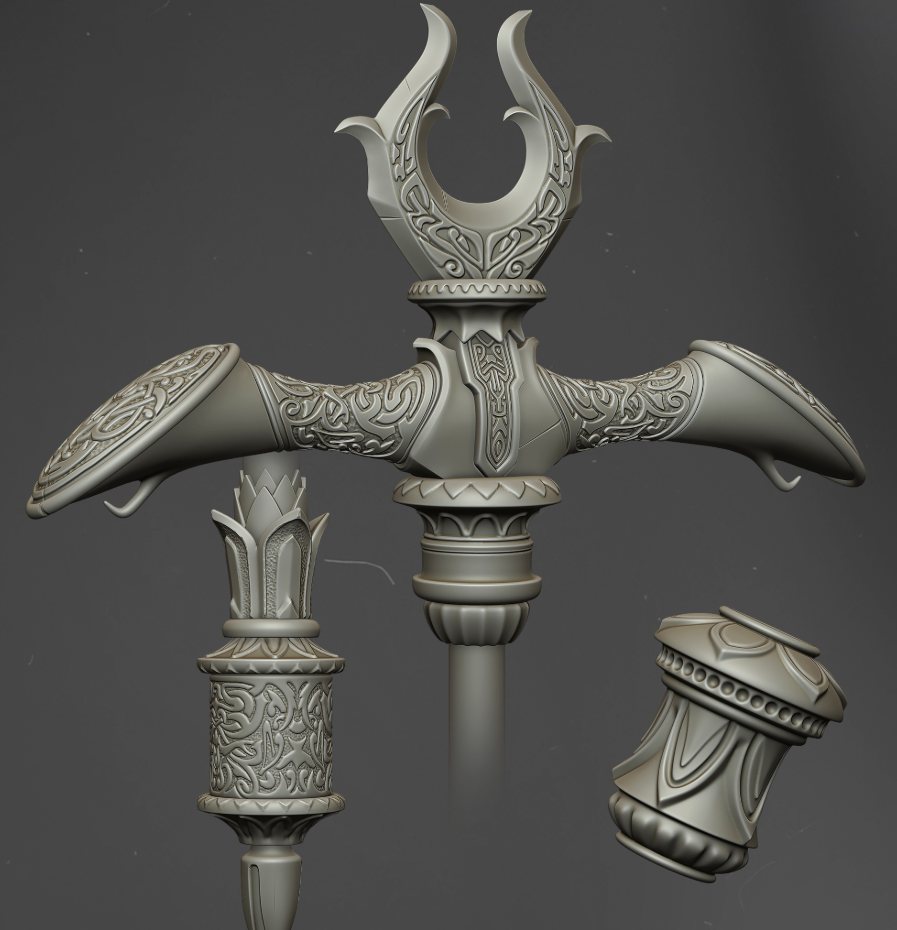
Rock and bark don’t convince without a sculpt.
Cliff faces, tree bark, vegetation, from your references and at your scene’s scale. Together we decide what gets a unique sculpt and what becomes a reusable set for the whole location.
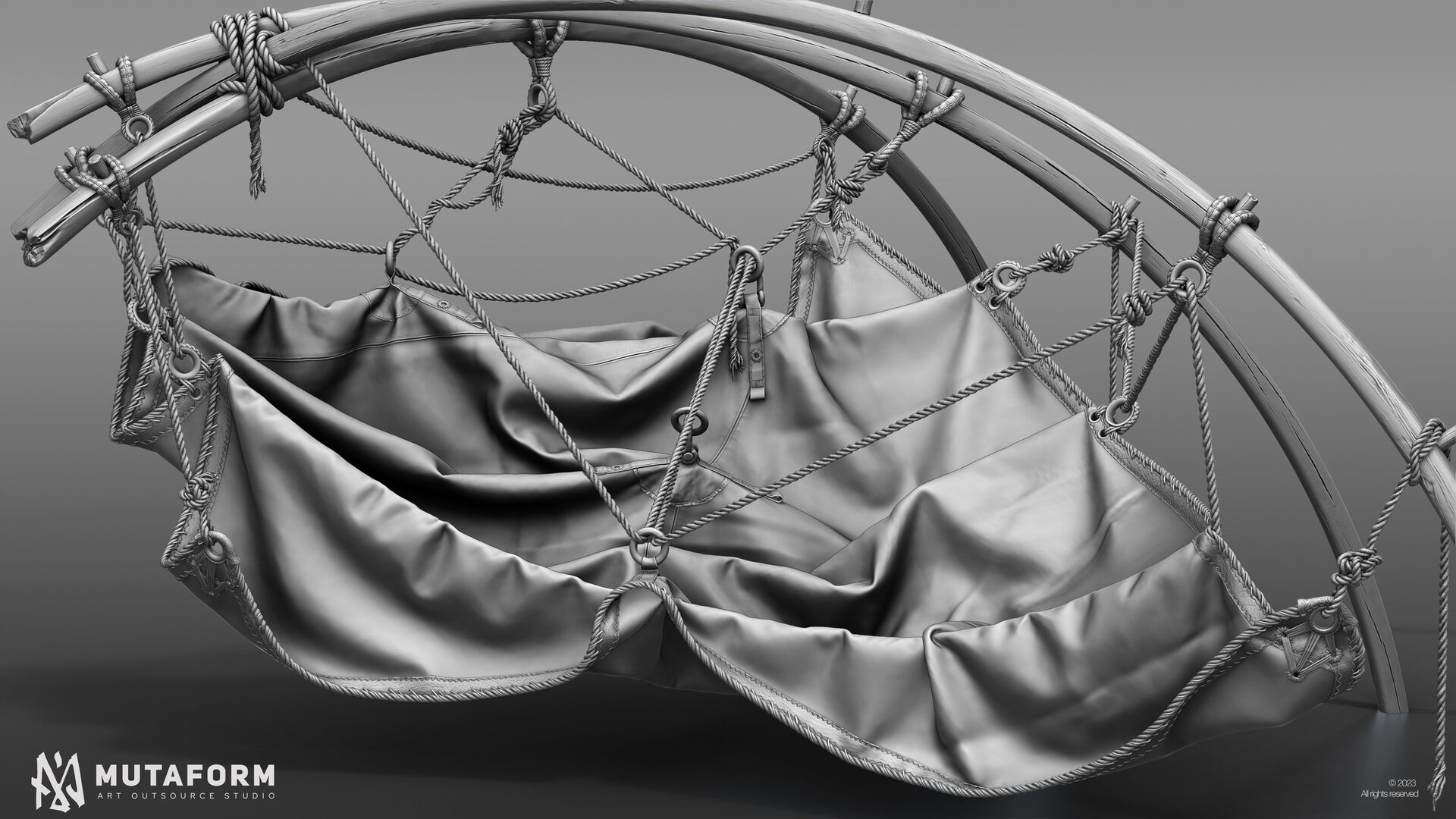
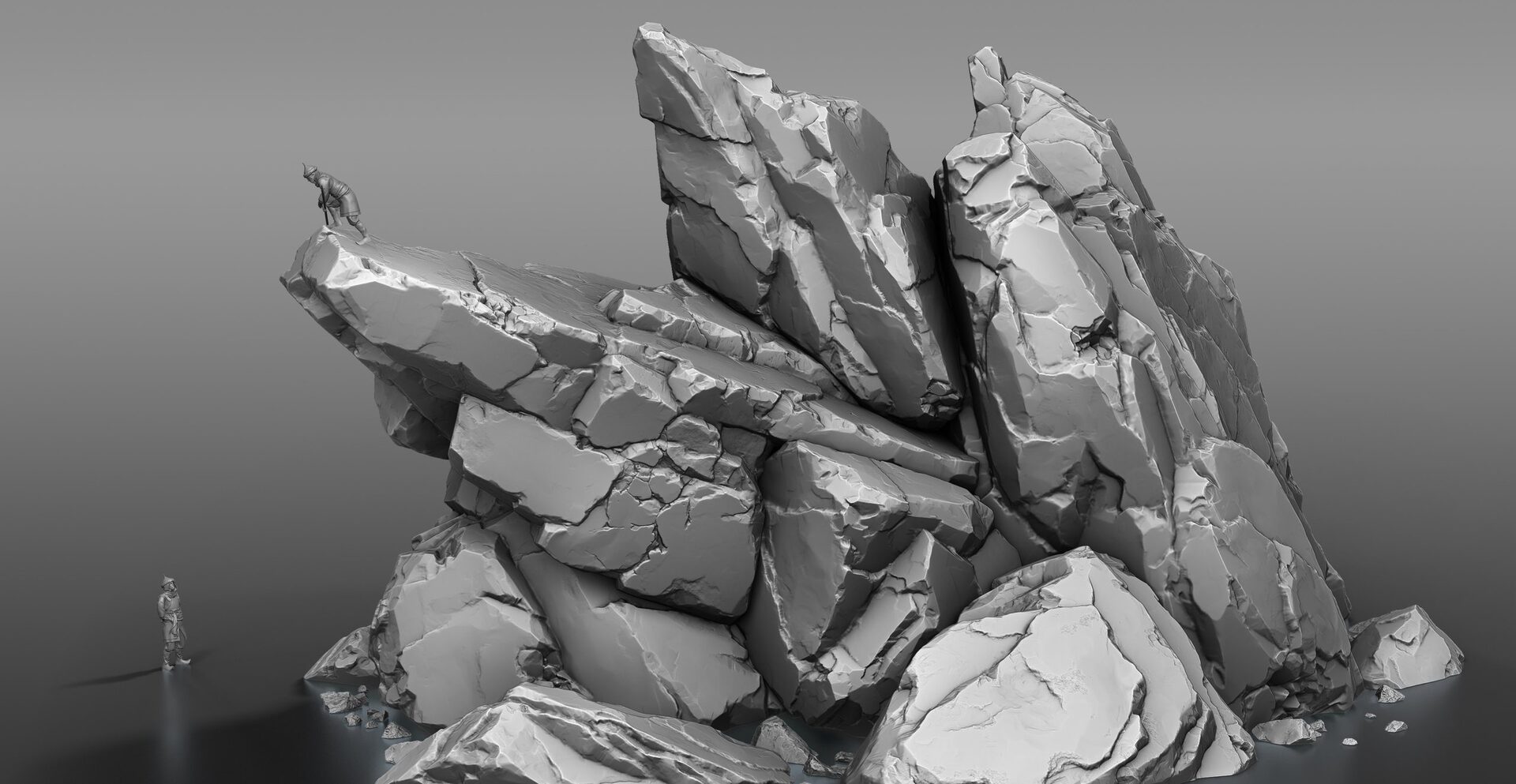
Simulation for the folds, sculpt for the rest.
Where cloth hangs and creases, the folds come from simulation, so they fall like real fabric. Seams, padding and wear go in by hand in the sculpt. Clothing and soft objects are built from the sewing pattern and the reference.
A sculpt is what makes an asset believable, not an upsell. A post-apocalyptic asset without one is a smooth blank: no dents, no weld seams, no chipped edges.
03External development
Why external production
You don’t need another team to manage.
We understand that, and we build our process to be useful without adding to your workload. Not every project needs a sculptor, and not all the time: one needs a series of cliffs, another an ornament for a set of gear, a third, someone for a month while a location is being built. Keeping a sculptor on staff for those peaks is expensive. We can take on all of your sculpting, from references to high-poly or a finished model in engine. You set the brief and make the calls at agreed checkpoints. Breaking the work down, assigning it, internal art review and keeping to the schedule are our job. That’s what you pay an external team for: not the ability to send a model, but taking the production load off your in-house team.
Start small. Most partnerships open with a paid pilot, sometimes as small as one object. It tests the whole chain, from contract to delivery to payment. If it doesn’t click, we stop there: you pay only for the days worked, and the source files are yours.
04Team and review
How we work inside your team
Your rules stay your rules. Our process adapts to them.
We can bring experience and research while the requirements are still taking shape. But where the pipeline, the style guide and the decisions already exist, we don’t swap them for our own idea of what’s right.
- 01The team comes complete
Sculptors, an art lead and a manager come as one team: the stone, ornament and cloth of one location do not have to be split between vendors.
- 02Review before your sign-off
Every high-poly goes through peer review, an art lead check and our automated QC gate before it reaches you. What you see has already been checked at gameplay distance.
- 03Advice on request
If a decision is already made, such as detail depth, mesh density or high-poly only or a finished model, we follow it to the letter. If it’s still open, we lay out the trade-offs and recommend a route: a unique sculpt or a tileable set, how much fine detail survives the bake.
- 04Research and our own tools
Before work starts, we study the references (the rock, the material, the construction and the rules of the world). We also work out the production side: which pipeline suits your game and the shortest route to the result. That takes experience and a trained eye. Baking, naming checks and QC run through our own tools, with no extra line on the invoice.
- 05NDA and access
NDAs at two levels: the studio and each artist. Where you have your own infrastructure, we work inside it: your Perforce, your VPN. No subcontracting. Nothing goes into our portfolio without written permission.
- 06One point of contact
A manager and an art lead run the work on our side, and every question goes through one named contact. Dailies, not status meetings: once a day, everything in progress lands on one render sheet.
05Pipeline
Six stages, six sign-offs
- 01Brief and references
We go through the list, concepts, photos or blockouts, and pin down the scale and the distance the object is seen from. We come back with an estimate. Sign-off: scope and estimate.
- 02Blockout
Big forms and proportions at your scene’s scale. If you have a scene, we check the silhouette in it. Sign-off: silhouette and proportions.
- 03Primary sculpt
Main forms and surface character: rock, weave, folds. No fine detail yet. Sign-off: the form.
- 04Detailing
Fine detail for the viewing distance: pores, chips, seams, at a depth that will bake cleanly into the normal map. Sign-off: the detail.
- 05Prep for baking
We decimate the high-poly if the format agreed up front calls for it, and hand it over. If you ordered the sculpt only, this is where the work ends. Sign-off: the high-poly.
- 06Finished model
On request: retopology, UVs to your texel density, baking, texturing on your master materials, a check in engine. Sign-off: the asset in your scene.
06Delivered to your requirements
Bakes with no surprises
Formats. High-poly in a format agreed up front: decimated or full. A finished model in Unreal Engine 5, Unity or your engine.
Scale. We sculpt at the scale of your scene and in your engine units, so the object drops in without rescaling.
Built for the bake. Detail depth and mesh density set with the normal map in mind.
Texel density. With a finished model, UVs to your texel density, as in the rest of the scene.
Source files. The high-poly, and with a finished model the low-poly, bakes and texture sets. We agree the list up front. All of it is yours.
Hard-surface. Bevels, weld seams and castings, kept to the same bake-safe depth.
07Two ways to work
A batch of assets or the whole discipline
A batch of assets
- We lock in
- The batch, say a series of cliffs for a location or an ornament for a set of gear, and the day rate. You get a stage-by-stage estimate, billed as time and materials.
- We deliver
- Stage by stage. You sign off each one before the next starts. The last delivery is the high-poly in the agreed format, or the asset in your scene. Invoiced at month end.
- We scale
- We take the next batch: a new series, or finished models from high-polys you’ve already signed off.
The whole discipline
- We lock in
- A dedicated sculpting team on a monthly retainer. Same people, same rate, so you know the invoice in advance.
- We deliver
- At your project’s pace, location after location, with sign-off at agreed checkpoints.
- We scale
- We add people as the volume grows. The core team stays.
08What we need for an estimate
Four things
How many objects and what kind: wood, metal or stone, rocks and trees, cloth, ornament, hard-surface.
Concepts, photos or blockouts.
For a finished model: engine, budget, texel density. For high-poly only: the format.
When you need the result.
Missing something? Send what you have. No list yet? We’ll get on a call and build one together.
09Before you write
Quick answers
Eight questions people ask before the first email. Don’t see yours? Write to us and we’ll answer by email.
What does 3D sculpting outsourcing include?
Wood, metal and stone, ornament and carving, rocks and vegetation, cloth and soft forms, hard-surface, realistic or stylised. We deliver a bake-ready high-poly in a format agreed before work starts. On request, we take it through to a finished model: retopology, UVs, baking and materials, delivered into Unreal Engine 5, Unity or your engine.
Can we order the sculpt only, without a finished model?
Yes. We hand over the high-poly, decimated or full, in a format agreed before work starts, and your team bakes it. If you need a finished model, we add retopology, UVs, baking and materials as separate stages in the same estimate.
What does it cost?
We bill by the day, at the agreed rate. What moves the number most is how many objects there are, how fine the detail needs to be and whether a finished model for the engine is needed. Send the list and we’ll return a stage-by-stage estimate with the rate. On a retainer, the monthly invoice is fixed in advance.
How long does it take?
We give you a timeline with the estimate, broken down by stage: blockout, primary sculpt, detailing, prep for baking, finished model. How many items we can run in parallel depends on who’s free, and we’ll tell you that with the estimate.
What if the quality isn’t right?
Anything off gets caught at the next sign-off, and there are six, from scope to the high-poly or the asset in your scene. At worst, one stage of one object is redone. Work you’ve already signed off isn’t touched.
Who sets the technical budgets?
You do: the high-poly format and, with a finished model, triangle budget, texel density, the LOD scheme. If there are no requirements yet, we propose ours for your platform and agree them before work starts, so they don’t change along the way.
Do we get the source files?
Yes: the high-poly, and with a finished model the low-poly, bakes and texture sets. The list is agreed up front. Portfolio use and in-game credits are a separate clause in the contract, agreed before work starts.
How fast do we get an estimate?
Within 48 hours of getting the list, along with a straight answer on capacity: who on the team is free.
Send the list and we’ll come back with an estimate
A list is enough: how many objects, what they are, and whether you need a finished model. If you have concepts and dates, attach them: the estimate gets more precise.
Or just email contacts@mutaform.com. We read everything.