Realistic 3D props · indoor & outdoor
Prop art
outsourcing
for games
Hero props the player looks at up close, and the set dressing that fills a location. We sculpt, model and texture carved wood, painted decoration, wickerwork and cloth through to a finished asset that matches your scene’s texel density, LOD scheme and naming.
02The discipline
What we take on
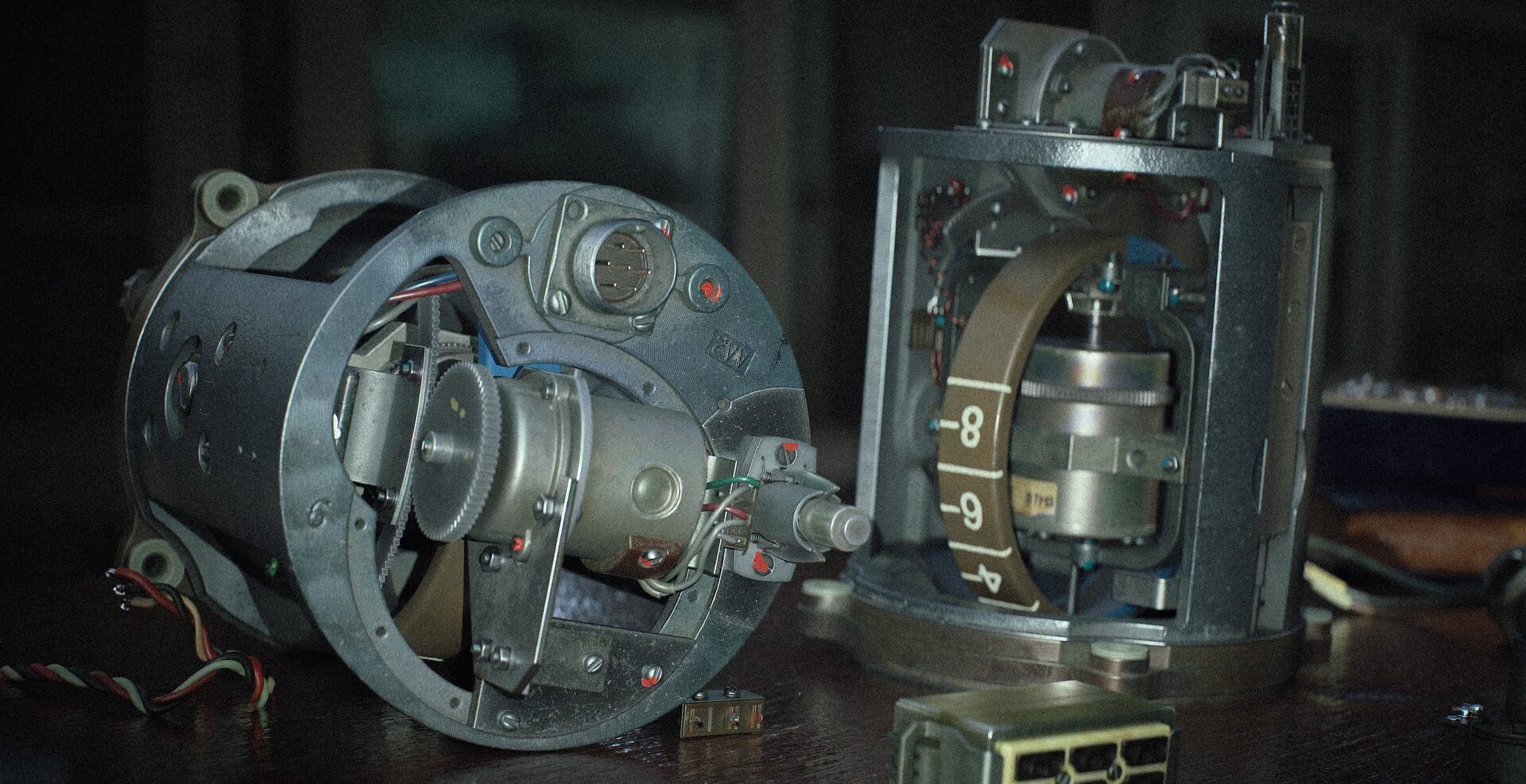
What the player walks right up to.
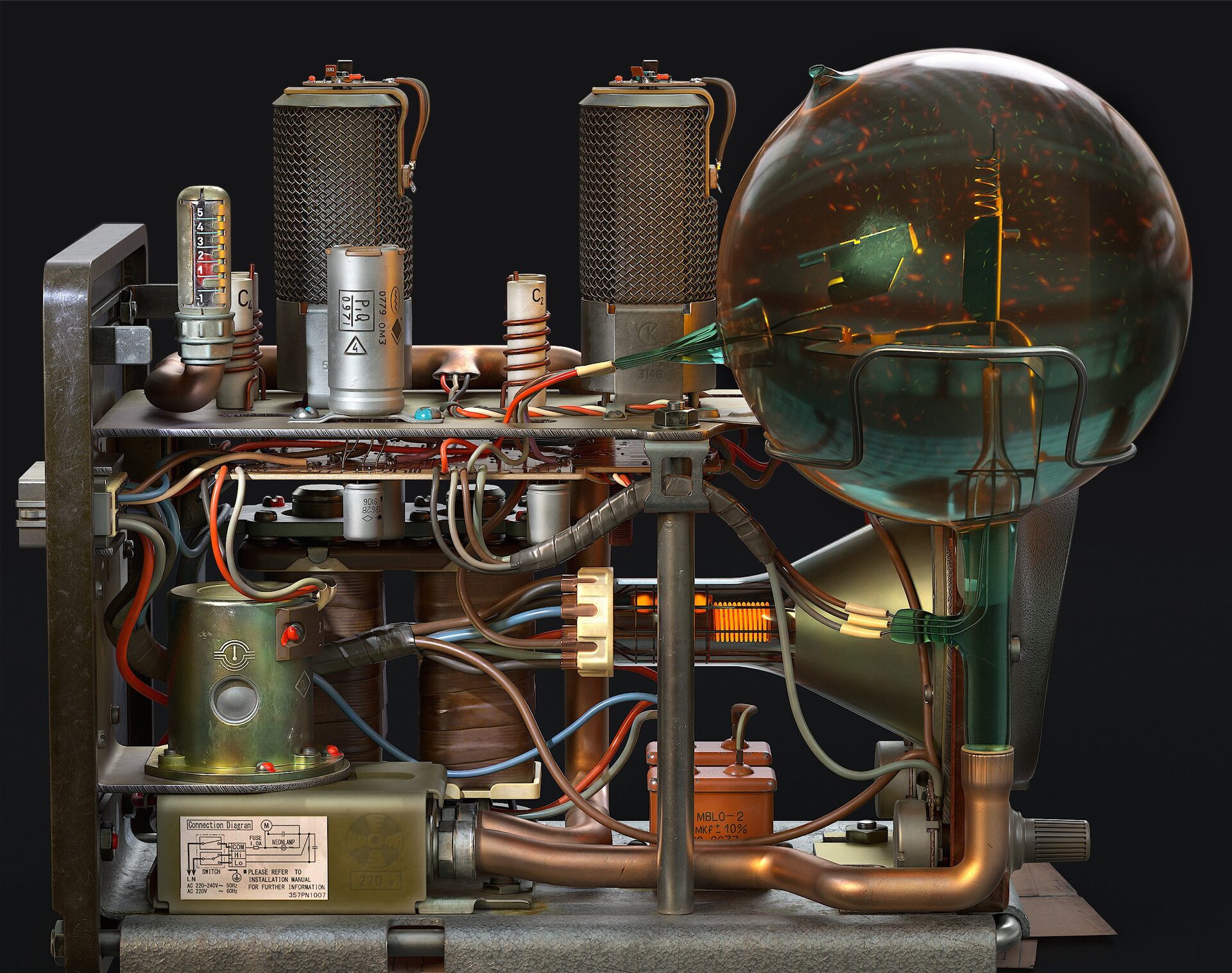
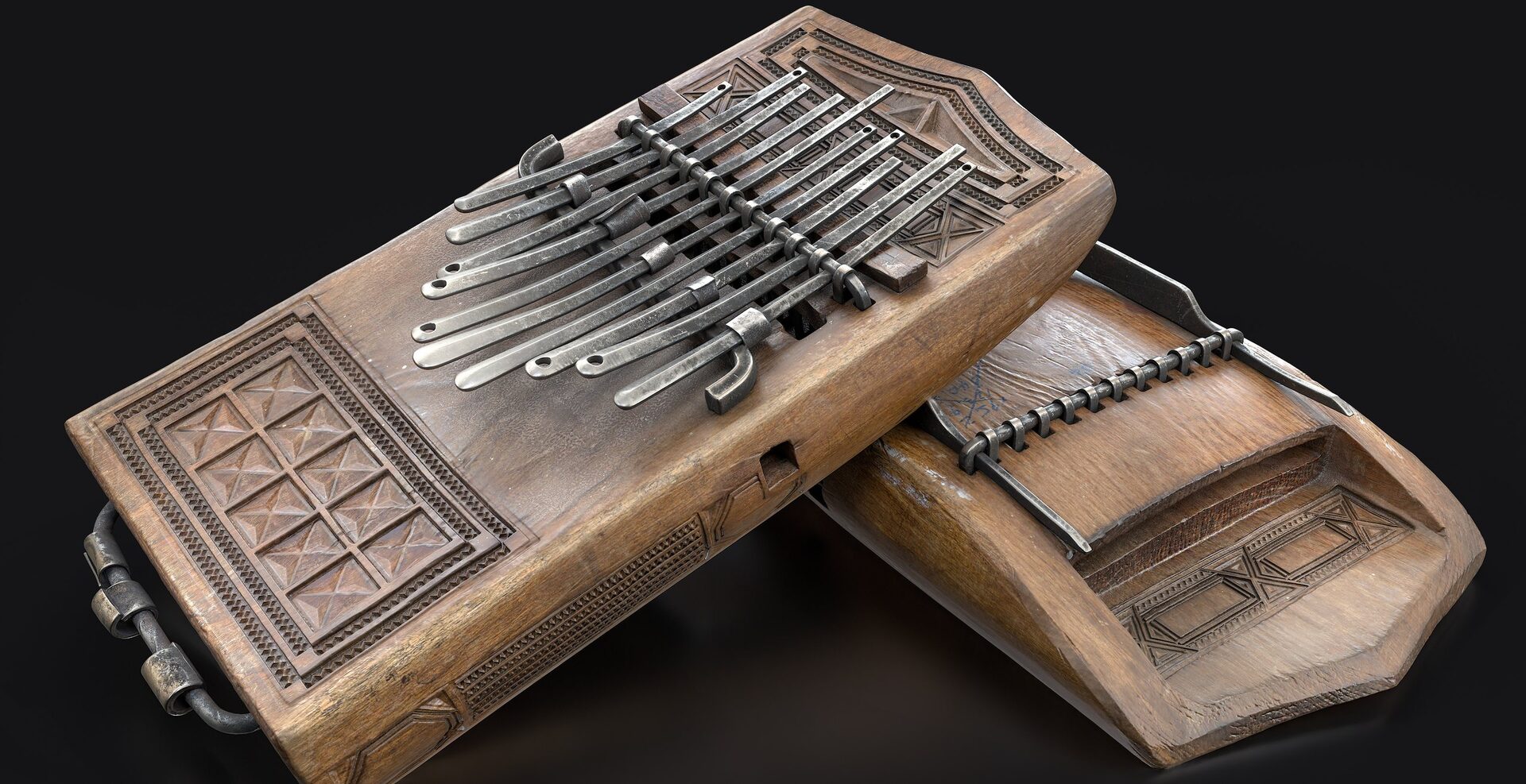
A chest that opens, an instrument you examine: detail for the closest angle, moving parts with pivot points, textured with your master materials.
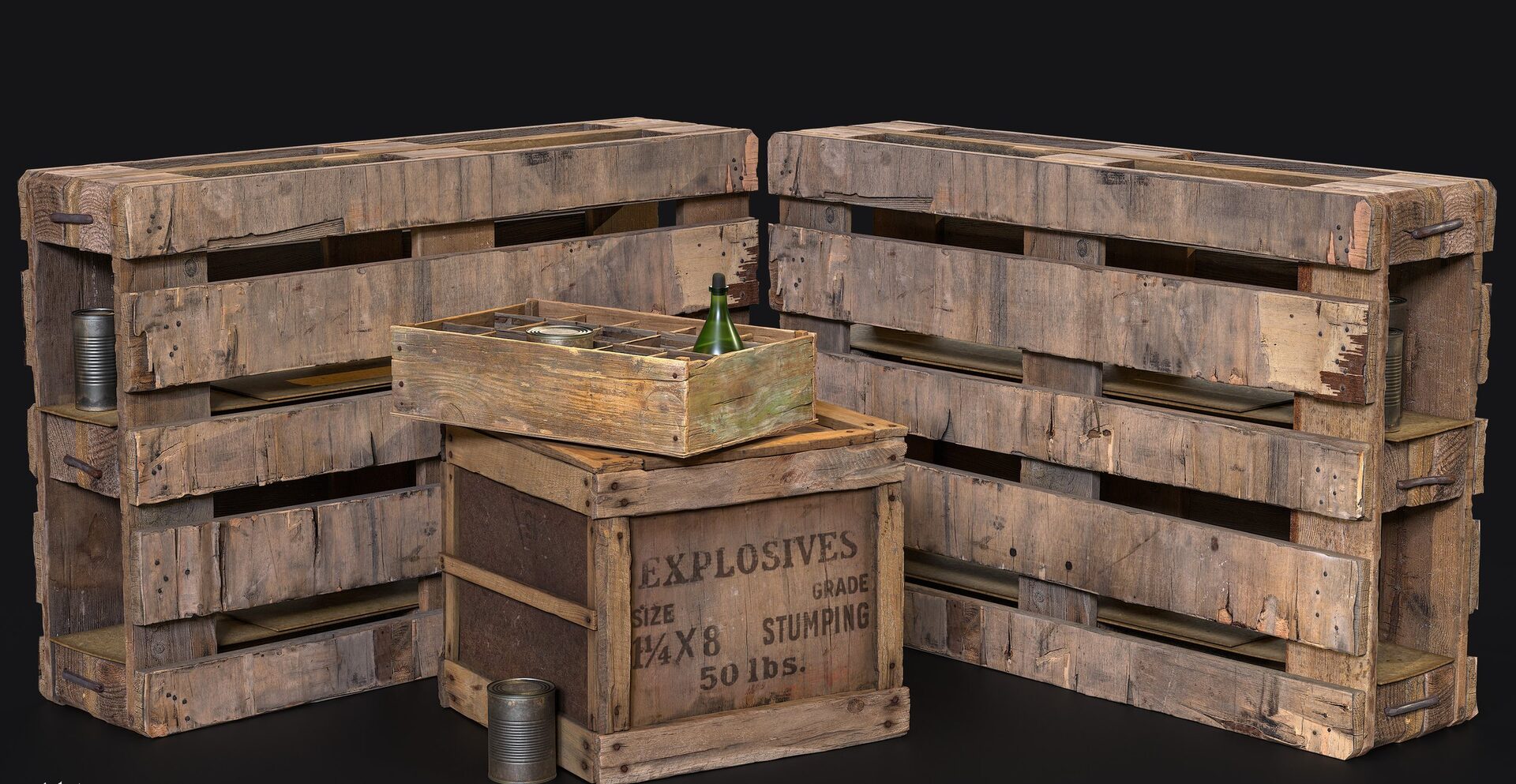
What a location needs by the dozen.
Crates, pots, tools, sacks: less detail and a smaller budget than hero props, agreed once for the whole list. Scale and texel density match the rest of the scene.
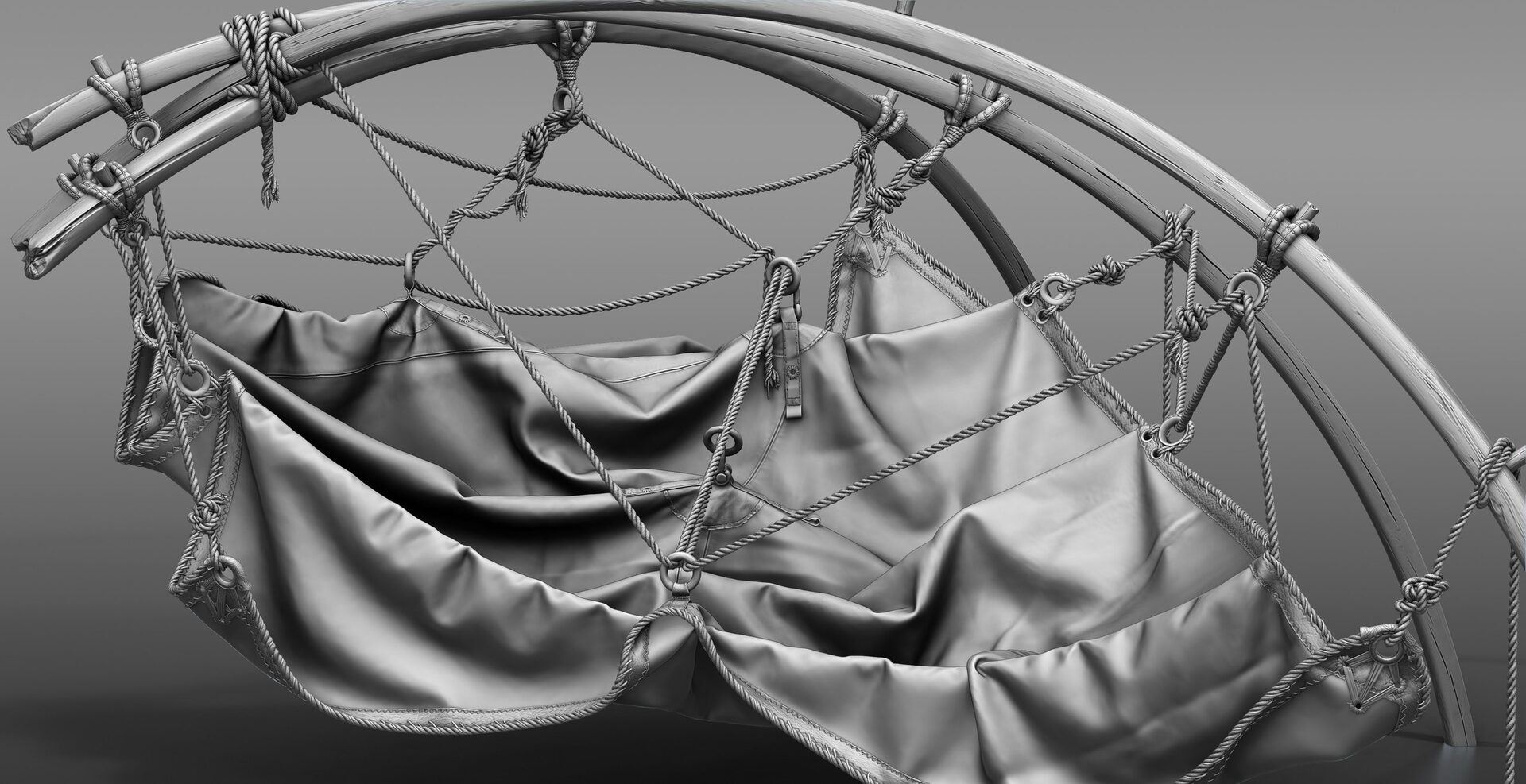
Surface detail that’s sculpted, not painted.
Carving, cloth folds and chipped stone are made in the sculpt and baked into the game model, so the detail survives and reads at gameplay distance.
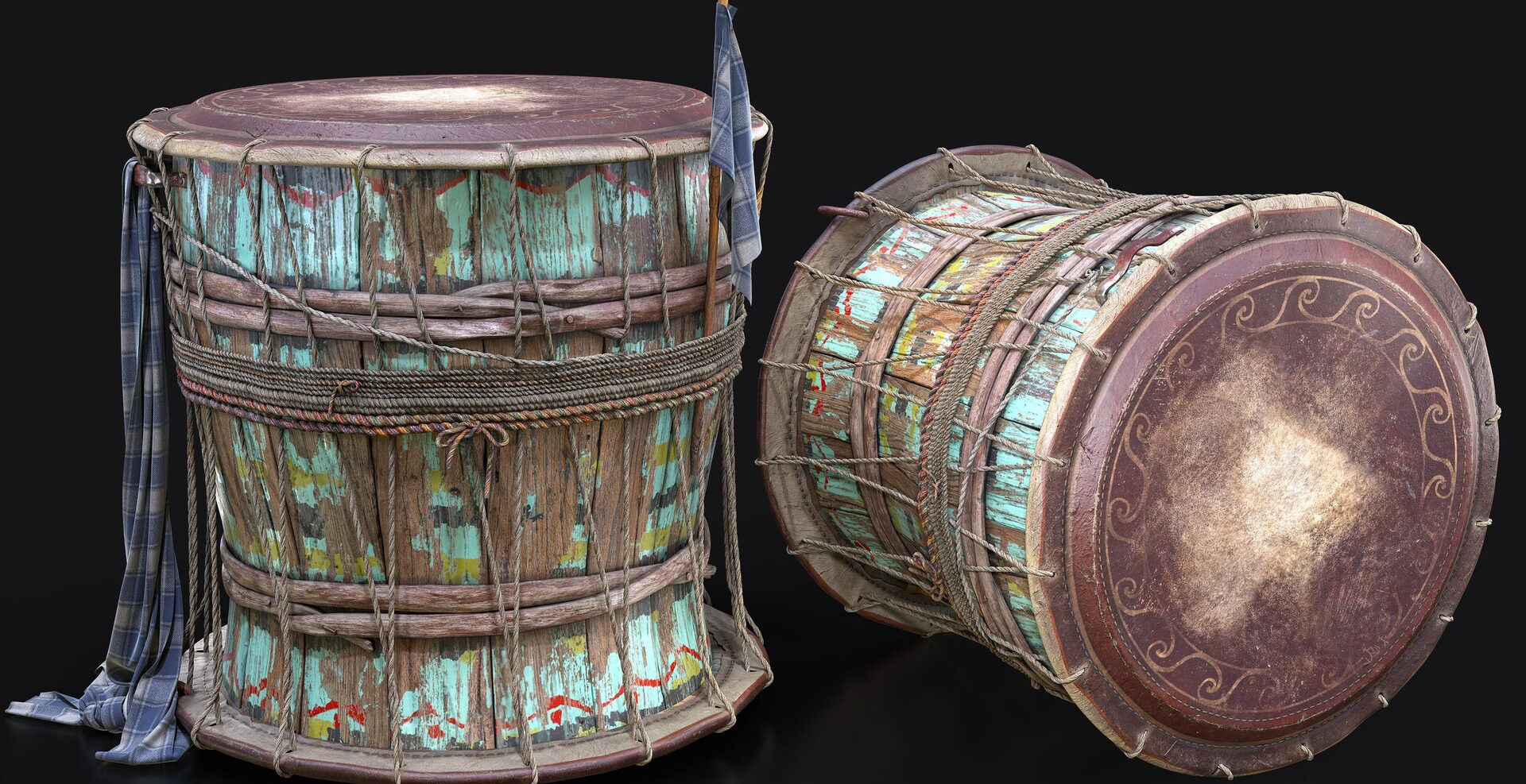
One object: several variants.
Shape, colour, degree of wear: new, worn, broken. Variants are built on the finished model, so repetition across a location stops catching the eye.
A prop only gets noticed when it doesn’t belong: bigger than its neighbours, sharper or newer than everything around it. So one team builds hero props and set dressing, at the same scale and against the same checklist.
03External development
Why external production
You don’t need another team to manage.
We understand that, and we build our process to be useful without adding to your workload. A location holds a lot of objects, from the painted chest in the foreground to the crates in the wide shot. That volume is needed while the levels are being assembled and then drops away: hiring staff for it and then finding them work doesn’t pay. We can take all the props of a level under one art lead. You set the brief and make the calls at agreed checkpoints. Breaking the work down, assigning it, internal art review and keeping to the schedule are our job. That’s what you pay an external team for: not the ability to send a model, but taking the production load off your in-house team.
Start small. Most partnerships open with a paid pilot, sometimes as small as one hero prop. It tests the whole chain, from contract to delivery to payment. If it doesn’t click, we stop there: you pay only for the days worked, and the source files are yours.
04Team and review
How we work inside your team
Your rules stay your rules. Our process adapts to them.
We can bring experience and research while the requirements are still taking shape. But where the pipeline, the style guide and the decisions already exist, we don’t swap them for our own idea of what’s right.
- 01The team comes complete
Prop artists, an art lead and a manager come as one team: the hero props and the set dressing of one location do not have to be split between vendors.
- 02Review before your sign-off
Every object goes through peer review, an art lead check and our automated QC gate before it reaches you. What you see has already been checked in engine.
- 03Advice on request
If a decision is already made, such as texel density, the budget or the LOD scheme, we follow it to the letter. If it’s still open, we lay out the trade-offs and recommend a route: a unique model or a variant from a set, how many degrees of wear, where a hero prop ends and set dressing begins.
- 04Research and our own tools
Before work starts, we study the references, the construction of the object, the materials and the rules of the world. We also work out the production side: which pipeline suits your game and the shortest route to the result. That takes experience and a trained eye. Baking, naming checks and QC run through our own tools, with no extra line on the invoice.
- 05NDA and access
NDAs at two levels: the studio and each artist. Where you have your own infrastructure, we work inside it: your Perforce, your VPN. No subcontracting. Nothing goes into our portfolio without written permission.
- 06One point of contact
A manager and an art lead run the work on our side, and every question goes through one named contact. Dailies, not status meetings: once a day, everything in progress lands on one render sheet.
05Pipeline
Six stages, six sign-offs
- 01Brief and references
We go through the list, your scene and the style guide, and gather references for each object. We come back with an estimate. Sign-off: scope and estimate.
- 02Blockout
We block the object out at your scene’s scale and agree how close the player gets to it. That decides how much detail it needs. Sign-off: dimensions, silhouette and level of detail.
- 03High-poly
Sculpted for the bake: form and surface detail in wood, stone, cloth and metal. Sign-off: form and surface detail.
- 04Low-poly and bake
We stay inside the triangle budget agreed up front and build LODs in the same pass. UVs go to your texel density, maps are baked from the high-poly. Sign-off: triangle budget, LODs and UVs.
- 05Materials
PBR on your master materials: metal, wood, cloth, plastic, with wear that follows use. Sign-off: texture sets and wear.
- 06In-engine check
Import, collision, LODs, clean naming. We check the object in the scene next to the others, under your lighting. Sign-off: the finished asset in your scene.
06Delivered to your requirements
Drops into the build, no rework
Engines. UE5, Unity or your own. We hand over the assets, or assemble and check them right in your build.
Triangle budgets. Fixed before work starts, separately for hero props and for set dressing, so at sign-off there is nothing left to argue about.
Texel density. As set in the project: a new object does not stand out among those already placed.
Naming and pivots. To your rules, with a pivot on every moving part. The level designer places the object and renames nothing.
Source files. High-poly, low-poly, bakes and texture sets. All of it is yours.
LODs and collision. Built and checked in your engine, delivered with the asset.
07Two ways to work
A batch of assets or the whole discipline
A batch of assets
- We lock in
- The batch, say the set dressing of one location or a series of hero props, and the day rate. You get a stage-by-stage estimate, billed as time and materials.
- We deliver
- Stage by stage. You sign off each one before the next starts, and the final sign-off happens in your scene. Invoiced at month end.
- We scale
- We take a new batch: the next location or variants of objects already delivered.
The whole discipline
- We lock in
- A dedicated prop team on a monthly retainer. Same people, same rate, so you know the invoice in advance.
- We deliver
- At your project’s pace, location after location, with sign-off at agreed checkpoints.
- We scale
- We add people as the volume grows. The core team stays, so new objects sit with the ones already made.
08What we need for an estimate
Four things
How many objects, which of them are hero props, which are set dressing, whether variants are needed.
Concepts, photos or objects already in the game.
Engine, triangle budgets, texel density, naming.
When you need the result.
Missing something? Send what you have. No list yet? We’ll get on a call and build one together.
09Before you write
Quick answers
Eight questions people ask before the first email. Don’t see yours? Write to us and we’ll answer by email.
What does prop art outsourcing include?
Hero props, the hero assets players see up close, set dressing, sculpted carving, cloth and wickerwork, and sets with variants. Modelling, UVs, bake and PBR materials, LODs and collision. Delivered into Unreal Engine 5, Unity or your engine, source files included.
What does it cost?
We bill by the day, at the agreed rate. What moves the number most is the share of hero props in the list and how many variants each one needs. Send the list and we’ll return a stage-by-stage estimate with the rate. On a retainer, the monthly invoice is fixed in advance.
How long does it take?
We give you a timeline with the estimate, broken down by stage: blockout at scene scale, high-poly, low-poly, UVs and bake, materials, assembly in the scene. How many items we can run in parallel depends on who’s free, and we’ll tell you that with the estimate.
What if the quality isn’t right?
Anything off gets caught at the next sign-off, and there are six, from scope to the object in your scene. At worst, one stage of one object is redone. Work you’ve already signed off isn’t touched.
We already have a style guide. Can you match it?
We work to your style guide and master materials. A new object is checked in the scene next to the ones already in the game. The fit shows on the very first asset, before a batch is ordered.
Who sets the technical budgets?
You do: texel density, triangle budget, the number of materials, the LOD scheme. If there are no requirements yet, we propose ours for your platform and agree them before work starts, so they don’t change along the way.
Do we get the source files?
Yes, all of it is yours: high-poly, low-poly, bakes, texture sets. Portfolio use and in-game credits are a separate clause in the contract, agreed before work starts.
How fast do we get an estimate?
Within 48 hours of getting the list, along with a straight answer on capacity: who on the team is free.
Send the list and we’ll come back with an estimate
A list is enough: how many objects and which of them are hero props. If you have concepts, a style guide and dates, attach them: the estimate gets more precise.
Or just email contacts@mutaform.com. We read everything.